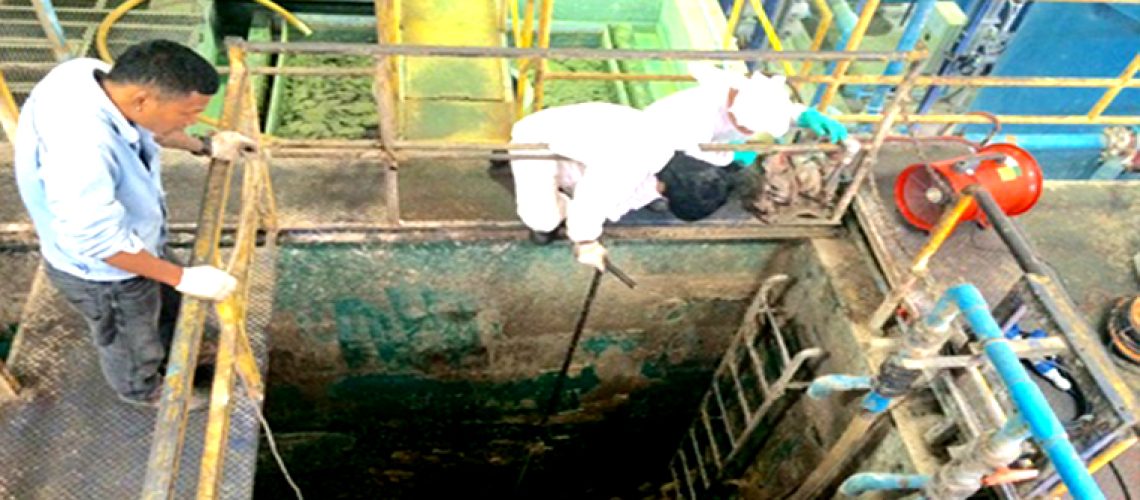
A confined space means any place in which, by virtue of its enclosed nature, there arises a reasonably foreseeable specified risk of fire or explosion; loss of consciousness of any person due to an increase in body temperature; loss of consciousness or asphyxiation of any person due to gas, fume, vapors or lack of oxygen; drowning of any person due to an increase in the level of liquid; or asphyxiation of any person who is trapped by a flowing solid. Confined spaces include any chamber, tank, pit, well, sewer, tunnel, pipe, flue, boiler, pressure receiver, hatch, caisson, shaft or silo. Whenever workers enter a confined space, a permit-to-work certificate should be issued beforehand. This permit is only valid for working in one particular confined space. Any person who is going to enter and work in a confined space should apply for a permit-to-work certificate with any responsible party who is authorized to issue such permit. The permit should set out all the tools permitted and forbidden for use and the provisions for work implementation. Before issuing a permit-to-work certificate, the person responsible should ensure that the air inside the work place has reached a safe level, which should be maintained during work in progress. No danger should arise and other measures of risk control should be completed effectively. Permit-to-work certificates should be issued on an individual basis. When the time for completion as stipulated in the permit is over, workers must leave the confined space. If extra time is needed for work, a new certificate should be applied instead. Permit-to-work certificates and risk assessment reports should be displayed in a conspicuous space within the immediate vicinity of the confined space for workers’ reference. You can trust in confined space work of us.

